
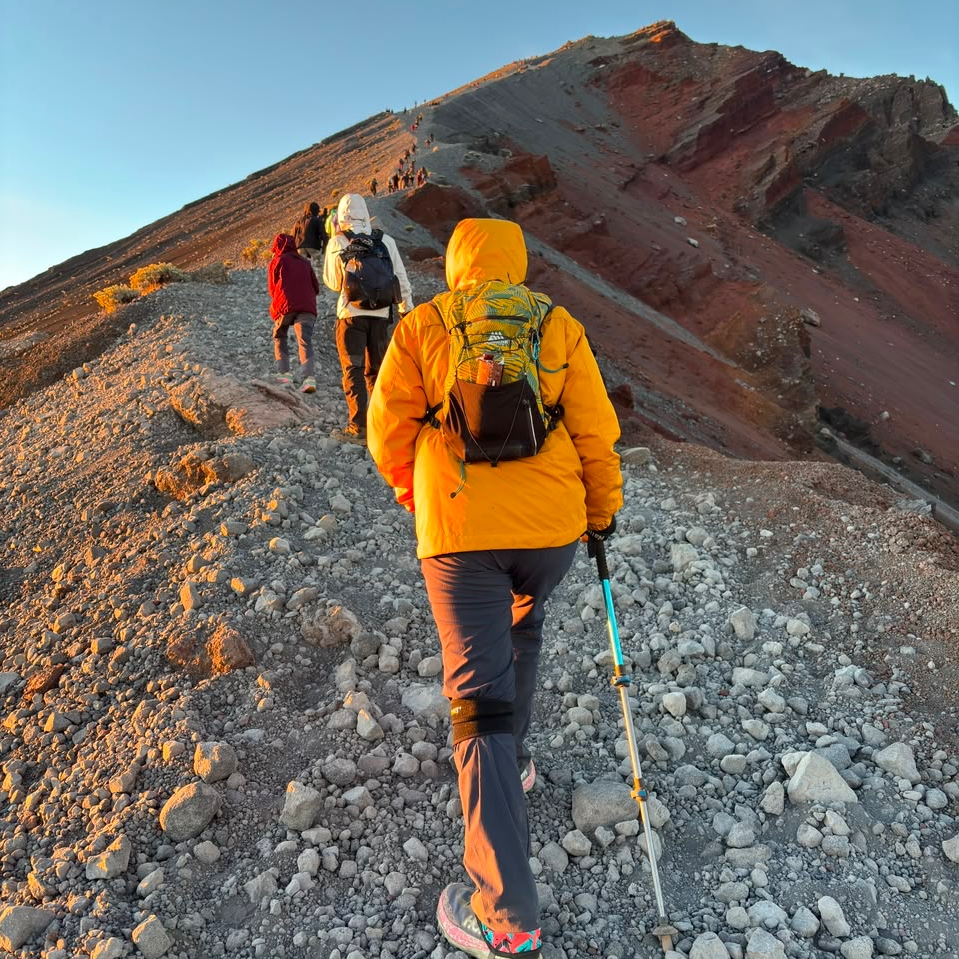
Climbing Mount Rinjani is not a casual walk in the park. The final push to the 3,726m summit is notoriously grueling: a 1,000-meter vertical ascent in the freezing dark, entirely on loose volcanic gravel (scree). For every two steps you take up, you slide one step down.
To conquer this safely and actually enjoy the experience, you need to begin physical preparation at least 8 to 12 weeksbefore your trek.
1. Cardiovascular Endurance (The Engine)
You will be hiking for 7 to 10 hours a day. As you push past 3,000 meters, the air becomes significantly thinner, meaning your heart and lungs have to work much harder to supply oxygen to your muscles.
-
The Baseline: Aim for 3 to 4 days a week of sustained aerobic activity (running, cycling, swimming, or rowing) for 45 to 60 minutes.
-
The Specifics: The best training for hiking is hiking. Once a week, complete a long, sustained walk (3 to 6 hours) on uneven terrain.
-
Incline Training: If you live in a flat area, set a treadmill to the maximum incline or use a stair-climber machine for 45 minutes to simulate the steep ascent.
2. Lower Body Strength (The Scree Conquerors)
Your legs will take a massive beating. The ascent demands explosive quad and calf strength, but the steep descents will absolutely shred unprepared knees and hamstrings.
Focus on these exercises 2 to 3 times a week:
-
Step-Ups: Use a knee-high box or bench. Hold dumbbells and step up, fully extending your leg. This directly mimics climbing steep rocks.
-
Lunges (Forward and Reverse): Builds unilateral balance and strengthens the stabilizing muscles around your knees.
-
Calf Raises: Crucial for the summit push where you will be essentially walking on your tiptoes up the steep gravel.
-
Eccentric Squats: Count to four while slowly lowering yourself into a squat, then stand up quickly. This trains your muscles for the “braking” motion required during the brutal descent.
3. Core and Back Durability
You will be wearing a 25L to 35L daypack for up to 10 hours a day. If your core is weak, you will inevitably hunch forward, leading to severe lower back and shoulder pain.
-
The Routine: Add 10 to 15 minutes of core work to the end of your workouts.
-
Key Movements: Planks (front and side), deadbugs, Russian twists, and kettlebell farmer’s carries. The goal is endurance, not necessarily a six-pack; you want muscles that can brace your spine all day.
4. The “Dress Rehearsal” Training
In the final month before your trip, combine all your training elements into “dress rehearsals.”
-
Pack Weight: Do your long weekend hikes wearing the exact boots you will wear on Rinjani, carrying the exact daypack loaded with 5-7kg (11-15 lbs) of gear and water.
-
Why it matters: This toughens the skin on your feet to prevent blisters, tests your backpack’s hip-belt for chafing, and ensures your body is accustomed to the specific biomechanics of walking under load.
Key insight: You cannot directly train for altitude at sea level. However, a high level of cardiovascular fitness means your body expends less energy on the physical act of climbing, leaving more physiological reserves to handle the stress of lower oxygen.